True Fellowship Requires Vulnerability
What creates genuine fellowship among believers?
We often assume that fellowship develops through shared interests, similar backgrounds, common theological convictions, or participation in the same church activities. These things may bring people together, but they do not necessarily create deep fellowship. People can worship in the same sanctuary, attend the same small group, and study the same Bible passages while remaining largely unknown to one another.
Christian fellowship deepens when people share not only their strengths and spiritual insights but also their weaknesses, fears, wounds, and limitations. Yet vulnerability alone does not create fellowship. A person may reveal weakness and be misunderstood, judged, or rejected. Vulnerability becomes the foundation of fellowship only when it is received with compassion, humility, trustworthiness, and grace.
I learned this lesson in an unexpected place during my rehabilitation in South Korea.
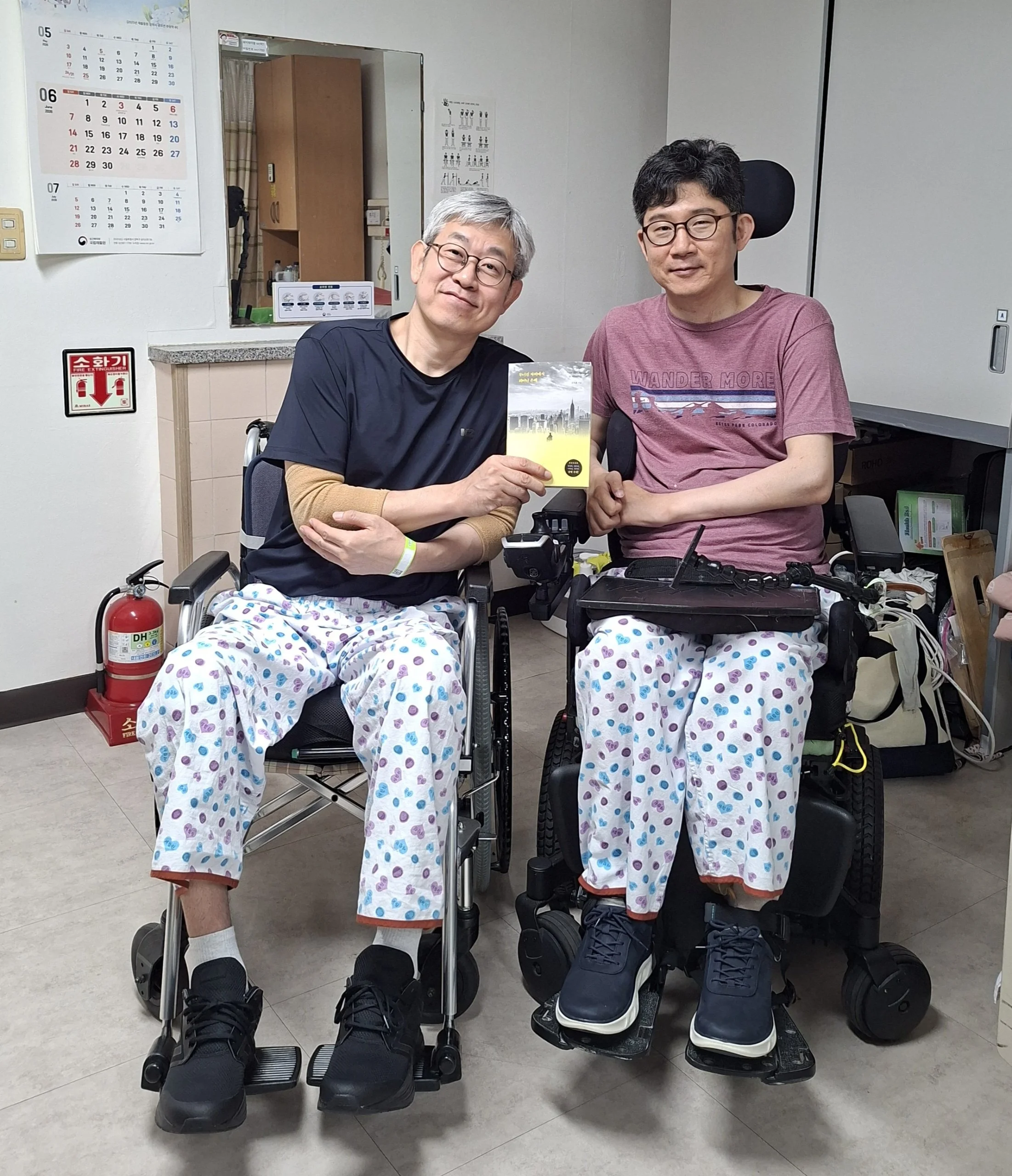
The rehabilitation environment in Korea was different from what I had experienced in the United States. I shared a hospital room with three other patients, and each patient had a caregiver. In practical terms, eight people occupied one room.
When I first entered, the room seemed small. Later, however, I learned that it was larger than many other hospital rooms, where six patients and their caregivers might share the same space. What initially appeared unfortunate gradually came to seem like a form of good fortune.
For approximately one month, eight strangers shared their daily lives. We ate three meals a day in one another’s presence. We talked about our treatment, our families, our pain, and our hopes. We encouraged one another when someone became discouraged. We also made foolish jokes that were often not very funny. Yet somehow we laughed.
Perhaps we laughed because we needed moments of relief within an environment shaped by pain, uncertainty, medical procedures, and interrupted dreams. Laughter reminded us that even in suffering, life had not completely disappeared.
Most of us were not believers, but we shared a common hope: we all wanted to improve. For three patients who had recently sustained spinal cord injuries, improvement meant regaining movement and perhaps walking again. Their lives had changed suddenly, and they were still learning what their injuries might mean for the future.
My goal was different. I had lived with a spinal cord injury for many years. I was in rehabilitation partly to improve physically and to receive the medical evaluation necessary for disability registration in Korea.
Our histories were different, and our expectations were not identical. Nevertheless, we shared the experience of bodily limitation, the uncertainty of rehabilitation, and the hope that tomorrow might be better than today.
There was also a deeper form of vulnerability in the room. Because of our disabilities and medical conditions, many of the ordinary boundaries people use to protect themselves were significantly reduced. Some of us had pressure sores and could not safely sit on a toilet. As a result, bowel care sometimes had to be performed in the hospital room.
Curtains separated the patient areas and provided a limited degree of privacy, but they could not completely conceal what was happening. At night, we heard bodily sounds. We sometimes smelled unpleasant odors. Everyone understood what was taking place behind the curtains.
It was not pleasant, but it was necessary. No one needed to explain these realities in detail. We understood that they were connected to health, survival, and rehabilitation. We also knew that none of us had chosen such a vulnerable condition. The experience could have produced embarrassment or emotional distance. Instead, it gradually created understanding.
Because we could not completely hide our physical weakness, we became less able to pretend that we were strong and self-sufficient. The room exposed the fragility of the human body. It reminded us that any person, regardless of age, education, personality, or social standing, can become dependent upon the care of others.
That shared vulnerability changed the atmosphere of the room. During the day, the curtains were usually pulled aside. We saw one another while eating, resting, speaking with family members, waiting for therapy, and preparing for medical procedures. We became familiar with one another’s routines and struggles.
When someone was tired, we understood. When someone was discouraged, we knew why. When a patient made even a small improvement, the rest of us could appreciate its significance. We did not need to explain everything because we were living through similar realities.
This did not mean that our suffering was identical. Each person carried his own story, fear, and uncertainty. Yet our vulnerability created a shared language. We understood one another in ways that might have been difficult outside the hospital.
The fellowship that developed among us did not arise merely because painful realities had been exposed. Exposure alone does not create fellowship. It arose because vulnerability was received without ridicule or condemnation.
Weakness was met with understanding. Dependence was not treated as failure. Physical limitation was not regarded as a reason for rejection.
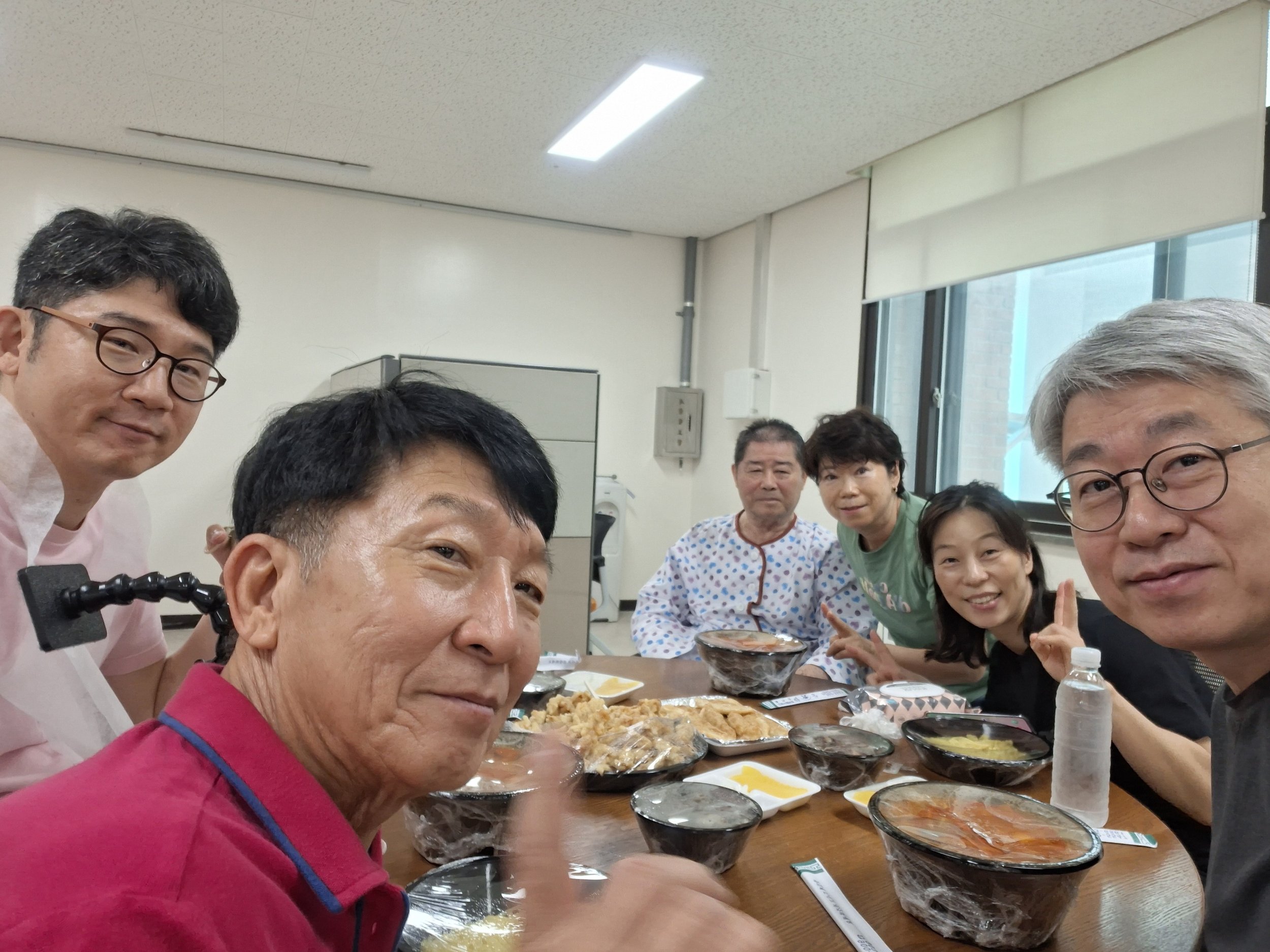
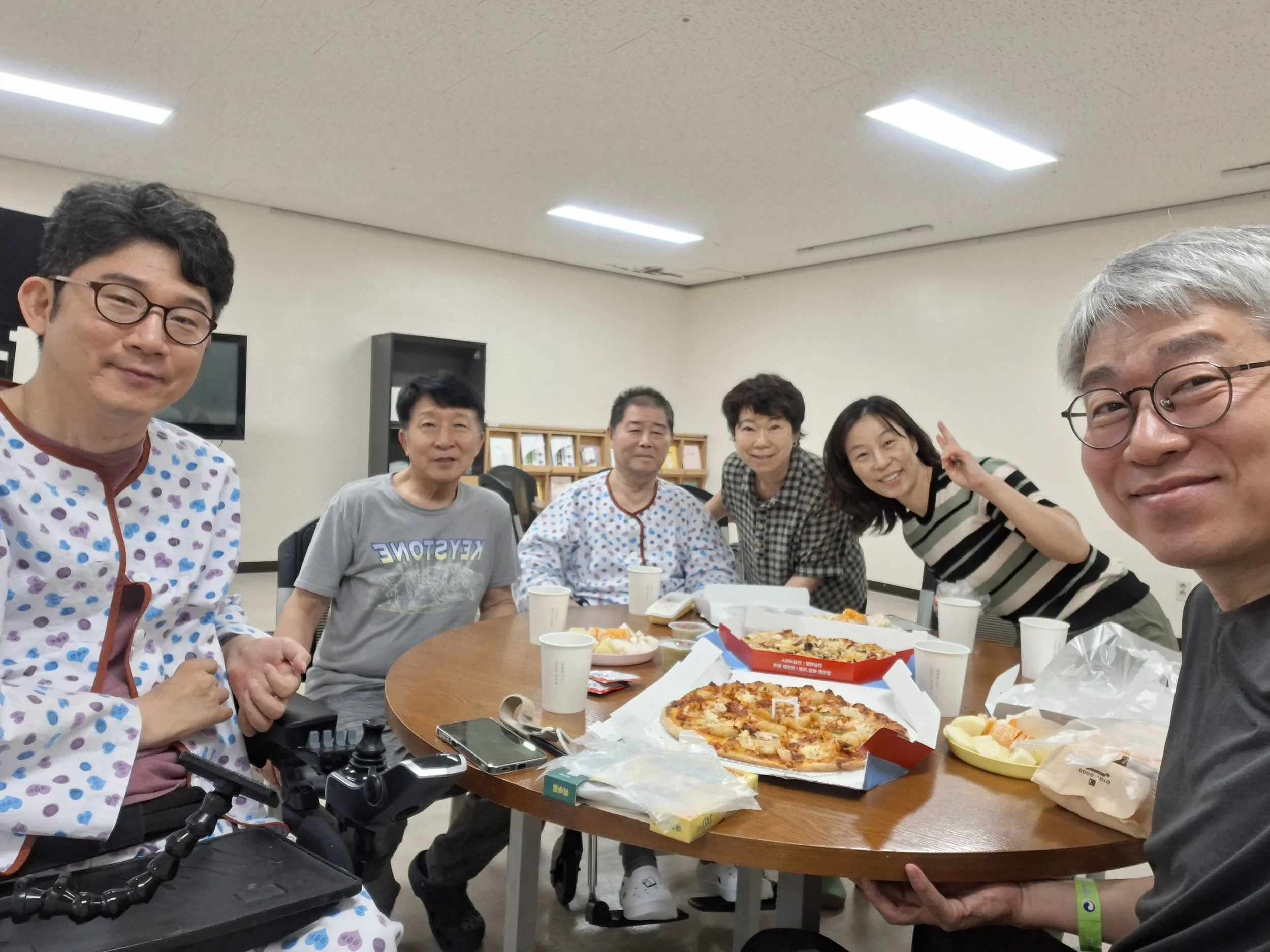
On the day of my discharge, several of us gathered in another room for a final meal. One family was Christian, while another was not. Yet we were able to express our gratitude and appreciation for one another and to reflect on the month we had shared.
We had entered the room as strangers. Through shared meals, physical weakness, common suffering, humor, hope, and mutual encouragement, we developed a fellowship that I had not expected to experience within such a short period of time. I remain in contact with some of them, and I continue to pray for them. I do not believe I will ever forget that month.
Much of our vulnerability was not voluntarily chosen. It was revealed by disability, illness, and the physical environment of the hospital. This distinction is important. The lesson is not that people should be forced to disclose private matters. Christian communities should never pressure individuals to reveal experiences they are not prepared to share. The lesson is that when vulnerability appears, it must be received faithfully.
When someone reveals suffering, how do we respond? Do we listen patiently, or do we immediately offer simplistic advice? Do we protect the person’s dignity, or do we turn the disclosure into gossip? Do we remain present when suffering becomes uncomfortable, or do we create distance because we do not know what to say?
A healthy Christian fellowship does not demand vulnerability. It creates an environment in which people can speak honestly without fear of humiliation. The apostle Paul writes, “Bear one another’s burdens, and so fulfill the law of Christ” (Gal. 6:2). Burden-bearing requires more than physical proximity. It requires the willingness to enter another person’s reality.
To bear a burden, we must first become aware that the burden exists. This often requires honest disclosure. It also requires the humility to admit that we ourselves carry burdens that cannot be borne alone. Christian fellowship therefore begins with the rejection of false self-sufficiency.
The church is not a gathering of people who have overcome every weakness. It is the body of Christ, composed of people who depend upon grace and upon one another. This is difficult because vulnerability involves risk. We may fear that others will think less of us. We may fear that our weakness will diminish our authority. We may fear that our confession will be remembered long after we have repented and moved forward.
These fears are not always imaginary. Churches sometimes receive vulnerability poorly. People who reveal their wounds may be given quick theological explanations instead of compassionate presence. Those who confess struggles may become subjects of gossip. Such responses teach people that honesty is unsafe.
True fellowship emerges when grace makes honesty possible.
Jesus did not build his community by gathering people who had no weaknesses. He called disciples who were fearful, impulsive, ambitious, confused, and often spiritually dull. They misunderstood his teaching, competed for recognition, abandoned him in fear, and struggled to believe the resurrection.
Yet Jesus continued to teach, correct, forgive, and restore them. The fellowship of believers is therefore not built upon the absence of weakness but upon the presence of grace. Our churches and small groups should be places where people do not need to pretend that everything is well.
A person should be able to say, “I am afraid,” without being dismissed.
A person should be able to say, “I am struggling,” without being condemned.
A person should be able to say, “I need help,” without being regarded as a burden.
Sometimes the most faithful response to vulnerability is not an explanation but presence.
During rehabilitation, we did not possess solutions for one another. I could not restore another patient’s movement. They could not remove my physical limitations. We could not guarantee one another’s future. Yet we could eat together. We could listen. We could laugh. We could encourage one another to endure another day.
Perhaps this is one of the simplest and deepest forms of fellowship: remaining present with one another when no immediate solution exists. The church must therefore ask not only whether its members meet regularly but whether they are learning to carry one another’s burdens.
Are weaknesses met with grace?
Are suffering people accompanied, or merely advised?
Can people receive care without shame?
Are we becoming the kind of people with whom others can safely become vulnerable?
Fellowship is not produced merely by placing people in the same room. The hospital placed eight strangers together, but proximity alone did not create our relationship. Fellowship emerged through shared life, mutual recognition, honest weakness, patience, humor, and hope.
Most importantly, it emerged because vulnerability was met with understanding. Christian fellowship deepens when people are no longer required to hide every weakness in order to belong. It grows when the community reflects the grace of Christ by receiving people not only in their strength but also in their frailty. We cannot bear one another’s burdens when everyone is pretending not to have any.
My rehabilitation room was not a church, and most of the people in it were not Christians. Yet in that room, I witnessed something the church must practice more faithfully: shared vulnerability can transform strangers into companions.
When weakness is received with compassion, suffering becomes a burden carried together. When fear is met with patience, people become less isolated. When limitation is met with humility, community becomes possible.
Christian fellowship is not created by the appearance of strength. It is formed when people bring their real lives into the presence of grace. We may enter the room as strangers. But when we share our burdens, receive one another’s vulnerability, and remain together in hope, we may leave as companions.